
Brand materials in progress on a Tokyo desk
Our Philosophy · The Remark Way

We believe great brands deserve to be understood.

Every strong business has something inside it that cannot be copied. Our work begins with respect for that inner value.

Something inside that cannot be copied

A way of thinking.

A standard of quality.

A reason for doing things the way they do.

A spirit customers can feel — when the brand is expressed clearly.

At Remark, our work begins with respect for that inner value.

We do not believe brand management is about making a company louder, trendier, or more Western. We believe it is about making the truth of the company easier to understand, easier to trust, and easier to choose.

For Japanese companies especially, this matters deeply. Many have extraordinary products, careful processes, and a level of commitment that deserves far more recognition overseas. But value does not always travel clearly across language, culture, category expectations, or buying behavior.

That is the gap Remark exists to close.

Japanese brands do not need to become Western.

They need to become understood.

What We Believe

Six principles that guide every engagement.

These are not abstract ideals. They shape the questions we ask, the decisions we make, and the advice we give.

01

A brand is not what you say. It is what people understand.

A brand lives in the mind of the customer.

It is the impression people carry when you are not in the room — the personality they assign to your company, what they believe you stand for, and why they would choose you over someone else.

That means branding is not decoration. It is not just a logo, a tagline, a website, or a package.

Branding is the discipline of shaping meaning.

If people misunderstand your value, they will undervalue your business. If they cannot quickly understand why you matter, they will move on. If your story does not match the expectations of the market, even a great product can feel invisible.

02

Translation is not transformation.

Accurate language is important, but accuracy alone does not create desire.

A sentence

Technically correct — and still flat.

A package

All the right information — and still cluttered.

A website

Explains everything — and still fails to make people care.

That is why we do not approach brand work as translation. We look at meaning, context, psychology, visual hierarchy, cultural assumptions, and buyer expectations. We ask what the brand is trying to communicate, what the market is likely to perceive, and where the gap between the two creates friction.

The goal is not to change the soul of the brand.
The goal is to carry that soul across the gap.

03

The essence should stay. The expression must evolve.

Strong brands are built on something real. That reality should not be thrown away just because a company enters a new market — in fact, the deeper spirit of the business is often its greatest competitive advantage.

But the way that spirit is expressed may need to change.

What stays

  • The spirit of the business
  • The standard of quality
  • The reason the company exists
  • The craft behind the product

What evolves

  • A claim that feels credible in Japan may feel vague in the West
  • A package that feels informative may feel overwhelming
  • A tone that feels humble at home may feel too quiet overseas
  • A story that makes sense internally may not give a new customer reason to believe

We protect what should not change, then reshape what must change so the brand can reach the people it needs to reach.

On what a brand is  ·  01 · 02 · 03 On how we work  ·  04 · 05 · 06
04

Customer behavior matters more than internal preference.

The most dangerous place to manage a brand from is the inside.

Internal values matter. Founder vision matters. Product truth matters. But a brand only becomes commercially effective when those things are expressed in a way the customer can notice, understand, believe, and remember.

What we study

What do they notice first?
What signals quality?
What creates trust?
What creates hesitation?
What do they need to understand before they feel ready to buy?
What emotional or practical risk are they trying to avoid?

Good brand management honors the company's internal truth, then expresses it in a way that works for the outside world.

05

Directness is a form of respect.

We call it being warmly direct.

Warm

We listen carefully. We make the effort to understand what you value most. We respect the history, craft, and ambition behind your business.

Direct

If a message is unclear, we say so. If a package creates the wrong impression, we explain why. If internal assumptions block market success, we bring them into the open.

This is not criticism for its own sake. It is protection.

A brand entering a new market has too much at stake to rely on politeness or guesswork. Our job is to help clients see what the market will see before the market decides for them.

Remark connecting with a Japanese client at a conference
06

A brand must work as a system.

A brand does not live in one place. It lives everywhere your customer meets you:

Website Packaging Sales materials Social media Advertising Trade conversations Customer service Retail presence Partner agencies

When those pieces are disconnected, the brand weakens. The message changes from channel to channel. The visual identity loses consistency. The sales team explains the company one way while the website explains it another. Agencies execute tasks without a shared understanding of the larger strategy.

One clear center. One source of truth.

A clear strategic direction. A consistent voice. A system that helps every touchpoint reinforce the same meaning.

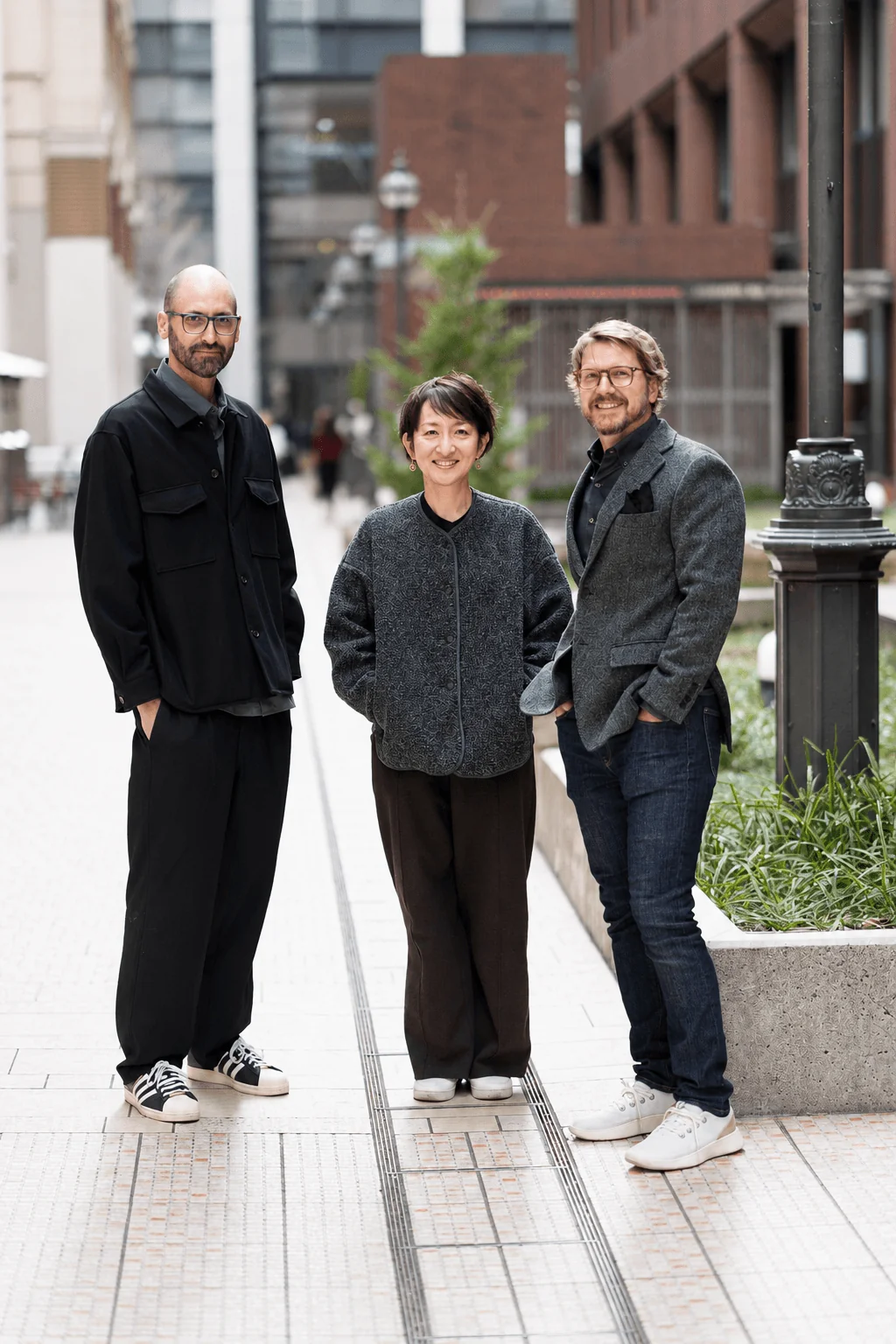
The Remark principals in Marunouchi, Tokyo

The gap-bridgers · Marunouchi, Tokyo

Why Our Approach Works

Our philosophy connects belief with method.

We do not rely on taste alone. We combine behavioral psychology, brand architecture, market research, and practical execution to help brands become easier to understand, easier to trust, and easier to choose.

Behavioral Psychology

Understanding why people say yes.

Customers rarely make decisions based on information alone. They are influenced by emotion, familiarity, risk, category expectations, and visual signals. We use behavioral insight to shape messaging and experience around how people actually decide — not how companies wish they would.

Brand Architecture

Creating the clarity that enables growth.

A strong brand needs structure — a clear position, a defined audience, a reason to believe, and a hierarchy of messages that makes the business easy to understand. Brand architecture gives the company a foundation that can support growth across markets, channels, teams, and campaigns.

Market Research

Keeping the work grounded in reality.

Belief matters, but belief needs evidence. We study the category, competitors, audience behavior, cultural context, retail environment, and market expectations. The goal is not research for its own sake — the goal is confidence. Better information leads to better decisions, fewer assumptions, and stronger execution.

Practical Execution

Turning strategy into momentum.

A strategy is only valuable if it can be used. Our work does not stop at abstract recommendations. We help turn positioning into messaging, messaging into design direction, and design direction into a brand system that teams can actually use. The result is not just a better story — it is a clearer way forward.

What This Means for You

Your brand is not
a surface problem.

Working with Remark means we look for the deeper value inside the business. We work to understand what you care about, what your customers need to understand, and what the market may currently be missing.

For Japanese companies, this often means representing the spirit of the business in a way that Western audiences can immediately recognize and respect. For broader brand management clients, it means clarifying who you are, why you matter, and how your brand should behave across every important touchpoint.

In both cases, the goal is the same.

"By implementing Remark's GPS, we were not only able to objectively grasp the issues we were facing, but also clearly defined what we needed to do. What was best was that the objective analysis and recommendations provided an opportunity to share everyone's awareness."

峯岸功 · Remark GPS™ Client
Remark principal in conversation with Japanese clients

The goal

More understood.

More trusted.

More consistent.

More valuable.

Because when a brand is managed well, it does more than look better.

It becomes easier to believe in.